Finnley Davidson Font for Modern Web Design
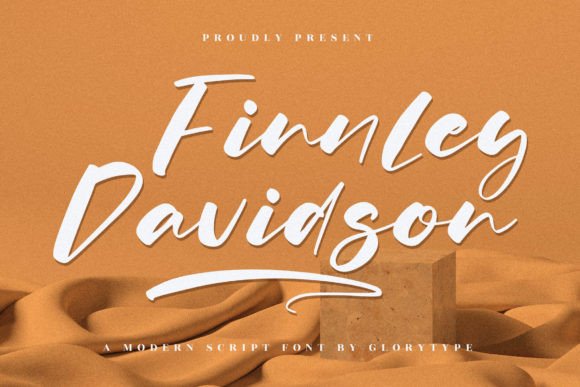
Finnley Davidson is a modern script font that brings a touch of elegance and personality to digital projects. As a web designer, I've found it particularly useful for creating visual interest in headers, logos, and branded content without sacrificing readability. Its clean lines and balanced curves make it versatile for both creative and professional contexts.
Visual Characteristics and Digital Appeal
Finnley Davidson has a contemporary feel with subtle variations in stroke weight and character spacing. It’s not overly ornate, which makes it suitable for a wide range of design applications. The font's personality is warm yet refined, making it ideal for brands that want to convey approachability and sophistication.
The modern typography of Finnley Davidson works well on screens of all sizes. Whether you're designing for desktop or mobile, the font maintains clarity and legibility. This is especially important for website headers, call-to-action buttons, and other elements that need to stand out but remain easy to read.
Applications in Web Design
Finnley Davidson can be used effectively in various parts of a website. For instance, it works well as a hero title on landing pages, where it adds a stylish touch while remaining readable. On an online store, it can be used for product banners or promotional headlines, helping to draw attention and create a cohesive brand identity.
In a creative portfolio site, using Finnley Davidson for section headings can help establish a unique tone. It pairs well with minimalist layouts, allowing the font to take center stage without overwhelming the design. For a coaching website, the font can be used in header sections or featured quotes to reinforce a sense of trust and professionalism.
Readability and Visual Hierarchy
When it comes to readability, Finnley Davidson performs well in short phrases and titles. It's best suited for use in larger text sizes, such as headlines or subheadings. For body copy, pairing it with a simpler sans serif font like Helvetica or Arial ensures that the content remains easy to scan and digest.
Using Finnley Davidson in visual hierarchy helps guide users through a page. By applying it to key elements like CTA buttons or feature titles, designers can direct attention and improve user engagement. The font's consistent rhythm and spacing contribute to a more polished look across different sections of a website.
Responsive Design Considerations
For responsive web design, it's important to test how Finnley Davidson appears on different screen sizes. While it generally scales well, ensuring adequate line height and letter spacing on smaller screens can enhance readability. When using it over image overlays or dark backgrounds, adjusting contrast and adding subtle shadows can help maintain legibility.
It's also worth considering how the font interacts with other design elements. For example, when used on light backgrounds, darker text colors may be necessary to ensure visibility. Conversely, on dark backgrounds, lighter text with appropriate padding can prevent the font from appearing too dense.
Font Pairing and Brand Identity
Finnley Davidson pairs well with a variety of fonts, depending on the desired aesthetic. For a more editorial look, combining it with a serif font like Georgia or Times New Roman can create a sophisticated feel. In contrast, pairing it with a clean sans serif font like Roboto or Open Sans offers a modern and accessible design.
As part of a brand identity kit, Finnley Davidson can serve as the primary typeface for logos, name cards, and marketing materials. Its versatility allows it to fit into both casual and formal branding scenarios. For digital products, using this font consistently across all assets helps build a strong and recognizable brand presence.
Licensing and Practical Use
Before implementing Finnley Davidson on client projects, it's essential to verify the font licensing terms. Commercial use typically requires a premium license, especially for websites, online stores, or digital templates. Ensuring that the font is properly licensed protects against legal issues and supports the font designer's work.
Checking the available file formats, such as webfont, OTF, or TTF, is also important for compatibility with different platforms and tools. Some versions may include alternate characters or weights, which can add more flexibility to your design options.
For multilingual support, confirming that Finnley Davidson includes glyphs for different languages can be crucial if your audience spans multiple regions. This ensures that the font remains functional and aesthetically pleasing across all intended uses.
Finnley Davidson is a great addition to any designer's toolkit. Its modern script style offers a balance between creativity and usability, making it a valuable asset for web design, branding, and digital content creation. Whether you're working on a landing page, social media graphic, or packaging design, this font provides a reliable and stylish solution that enhances the overall user experience.